Featured

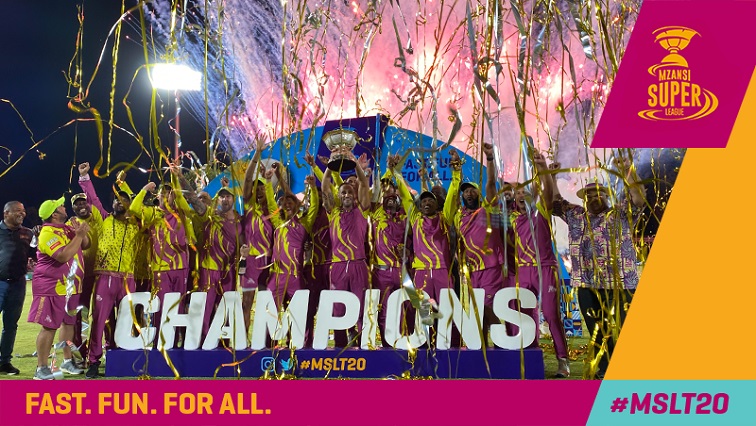
Why the Paarl Rocks won Mzansi Super League 2.0

The fractured wrist that ruled Aiden Markram out of the 2019 Mzansi Super League proved to be a blessing in disguise for the Faf du Plessis-led Paarl Rocks.

A source within the Paarl Rocks’s camp told South African Cricket that, if Markram was fit, he would have opened the batting alongside Cameron Delport at the expense of Henry Davids.

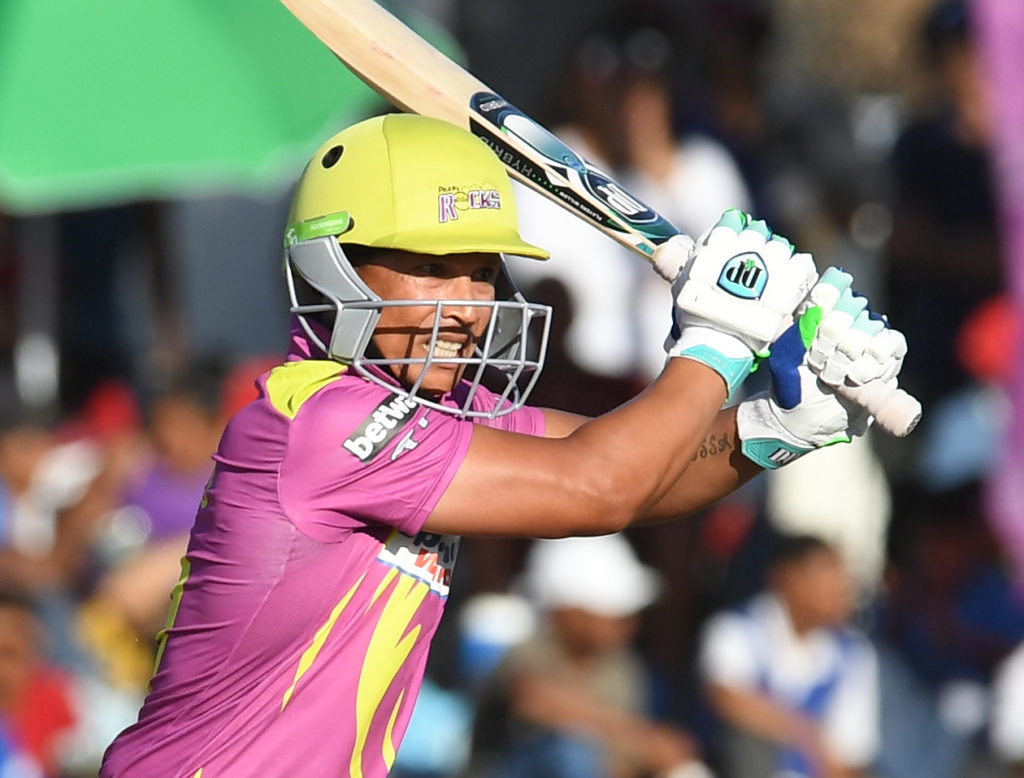
But Davids used Markram’s absence to cement his place at the top of the Rocks’ batting order and would go on to be the Rocks’ match-winner with an unbeaten 77 off just 44 balls in the MSL 2.0 final against the Tshwane Spartans.
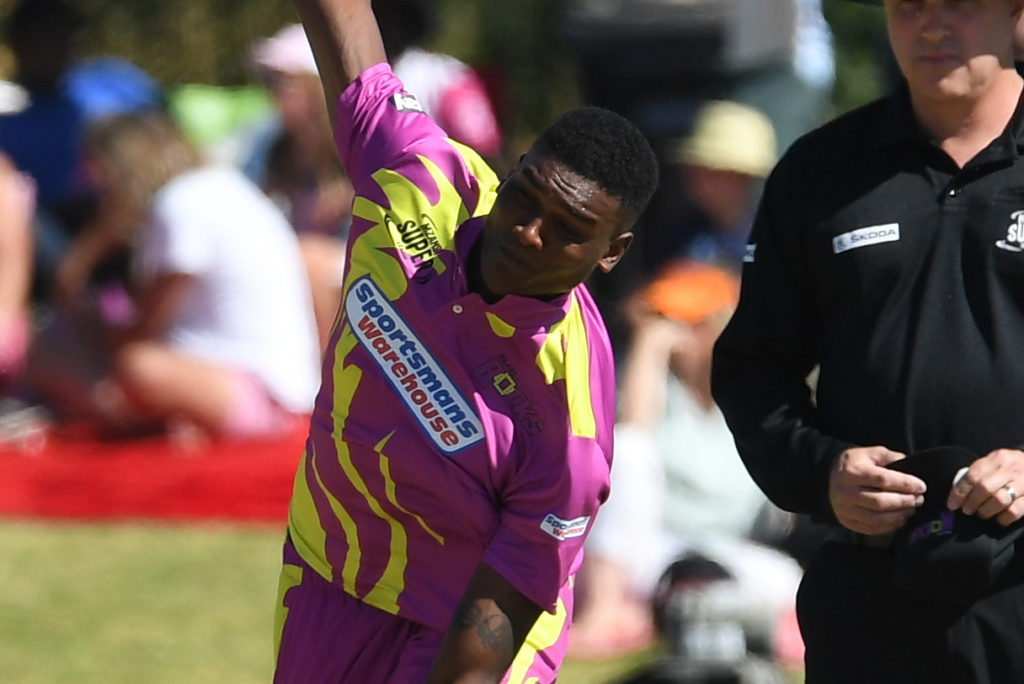
Captain Faf du Plessis’ management of fast-bowler Kerwin Mungroo in the final at Boland Park also aided the Rocks quest for victory.

Mungroo, who had been leaking runs at a swashbuckling rate in the matches building up to the final could be seen garnering advice from Du Plessis before every ball he bowled in the final.

This cleary helped Mungroo keep a calm head and focus on landing the ball in good areas as went went on to take 1/21 in the final at a miserly economy rate of 5.25.

Rocks’ coach Adrian Birrell also desrves credit for his picks in the pre-tournament draft in September this year – especially for the selection of Dwaine Pretorius.

The Proteas all-rounder went on to pummel his way to a 21 ball 43 in the final despite his scarcity of games in last year’s (2018) Mzansi Super League – where he was left out of the Jozi Stars’ playing eleven for 6 out of the 11 games the Stars played. Nevertheless, the Stars went all they way to the final and won it – without Pretorius.

The Rocks were also a ‘team’ in the true sense of the word as players throughout the lineup came to the party at some stage – such as Sibonelo Makhanya with 63 not out against the Jozi Stars, Kyle Verreynne with 36 not out against the Nelson Mandela By Giants, Ferisco Adams with 2/27 and 23 not out against the Giants, Hardus Viljoen with 2/9 against the Cape Town Biltz, Faf du Plessies with 66 not out against the Durban Heat etc.

Interestingly, Mkhanya along with Verreynne and Adams were on the loosing side in last year’s MSL when they were together at the Blitz and clearly used that pain as motivation to prevent themselves slumping towards a second consecutive MSL final disappointment.

*Statistics supplied by ESPNcricinfo
Featured

Why was Jean de Villiers in the crowd at the 2019 Mzansi Super League Final?

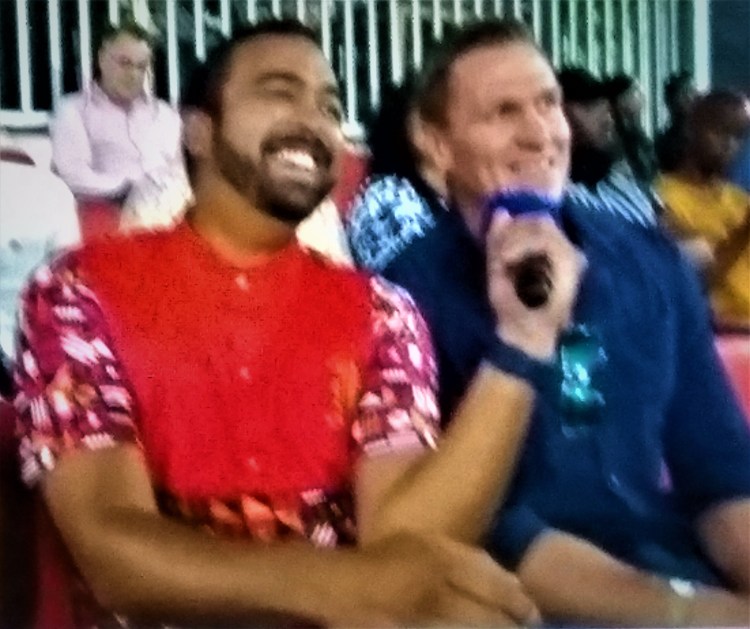
Former Springbok captain Jean de Villiers was one of the spectators cheering on the Paarl Rocks in last night’s Mzansi Super League Final against the Tshwane Spartans.

In fact, De Villiers decision to purchase a ticket paid dividends as Faf du Plessis led the Rocks to a convincing win by eight wickets.

But why does Jean de Villiers support the Paarl Rocks?

A cameraman spotted the former rugby star in the crowd, and he was hastily asked this very question by SABC3 Presenter Udo Carelse.

“I support the Rocks because I grew up in Paarl,” De Villiers responded wryly. “I still live in Paarl with my family. So, I think it’s fair to say that the whole of Paarl expects my support.”

That was when Rocks’ opening batsman Henry Davids was on just 10 runs but, as if De Villiers had a crystal ball in his snack-bag, he commented that Davids looks in “fancy form” with the bat.

A determined Davids did not let De Villiers down as he went on to blaze his way to an unbeaten 77 off just 44 balls.

However, De Villiers connection to cricket is not restricted to the Paarl Rocks.

He was also named in the Springbok squad to face the Proteas Cricket Team in the 2014 and 2016 editions of the Nelson Mandela Legacy Cup.

Then, on 26 November 2016, players at the Gary Kirsten Cricket High-Performance Programme enjoyed the pleasure of interacting with Jean de Villiers, who shared some of his insights and experience through a question and answer session with Kirsten himself.

“Jean gave us a fresh perspective on cricket,” said the Director of the High-Performance Programme Ryan Cook.

“He related stories on leadership, culture and his journey of excellence in his field,” Cook explained.

This kind of sporting-related knowledge and nous that De Villiers possesses could prove to be beneficial for the Proteas and there is no shortage of sport-junkies that Cricket South Africa’s Director of Cricket Graeme Smith could ask to share some sound words of advice with the cricketers. Think Victor Matfield, John Smit or former soccer stars like Matthew Booth or Mark Fish.

Featured

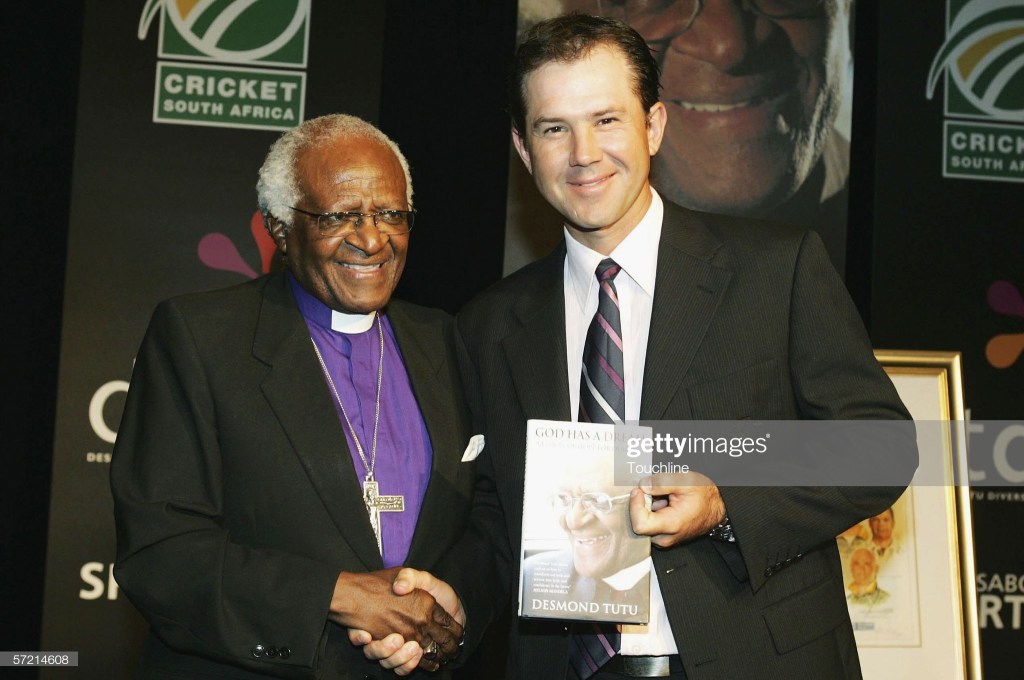
Can Desmond Tutu be CSA’s life-guard?

After Cricket South Africa’s weak of upheaval, in which its corruption-tainted CEO Thabang Moroe was suspended and hastily replaced by Titans CEO Jacques Faul on an interim basis, Archbishop Emeritus Desmond Tutu’s release from hospital in Cape Town after recovering from a stubborn infection could not have come at a better time for the problem-stricken CSA.

Tutu, a Nobel Peace Prize laureate who made his name as the Archbishop of Cape Town from 1986 to 1996, still has more of a contribution to make to cricket.

In fact, The Gentleman’s Game was one of the factors that led to his “slowing down” from public life in October 2010.

“The time has now come to slow down,” Tutu told The Guardian in 2010, “to sip rooibos tea with my beloved wife in the afternoons, to visit my children and grandchildren, and to watch cricket.”

Tutu identifies as a socialist and his thinking could be a great asset to an organization that was just run by Moroe, who appointed his cronies (such as CSA head of legal and company secretary Welsh Gwaza and chief commercial officer Kugandrie Govender) to key positions within the organization and threw out capable members who had been with CSA for years.

Tutu would ensure that no such self-centred figure like Moroe leads CSA again and, like he helped unite the campaign to resolve the problem of apartheid in South Africa, he can help unite the divided CSA.

Because Tutu is well-liked in cricketing circles, he was even afforded a standing ovation after he delivered the Marylebone Cricket Club (MCC) Spirit of Cricket Cowdrey Lecture at Lord’s in June 2008.

But there was also nervous laughter and awkward shuffling of feet among the all-ticket 1,500 audience when he relived the day MCC gatemen barred him from the pavilion – because he wasn’t wearing a jacket and tie.

In an interview with Alec Russel of the Financial Times in September 2013, Mpho (the youngest of Tutu’s three daughters), revealed that Tutu is only ever silent around the family table “when there is cricket on …”

In February 2011, Tutu and former England all-rounder Andrew Flintoff have been awarded honorary life membership of the MCC in “recognition of their diverse achievements on and off the cricket field,” the MCC said.

“On Mr. Tutu’s retirement he said that he hoped to watch more cricket,” MCC President Christopher Martin-Jenkins said. “He may now do so at Lord’s whenever he pleases, and he will always be welcomed.”

But it now seems the right time for CSA to also open their doors to Tutu.

Featured

Versatile Dane Vilas adding fire to the Durban Heat

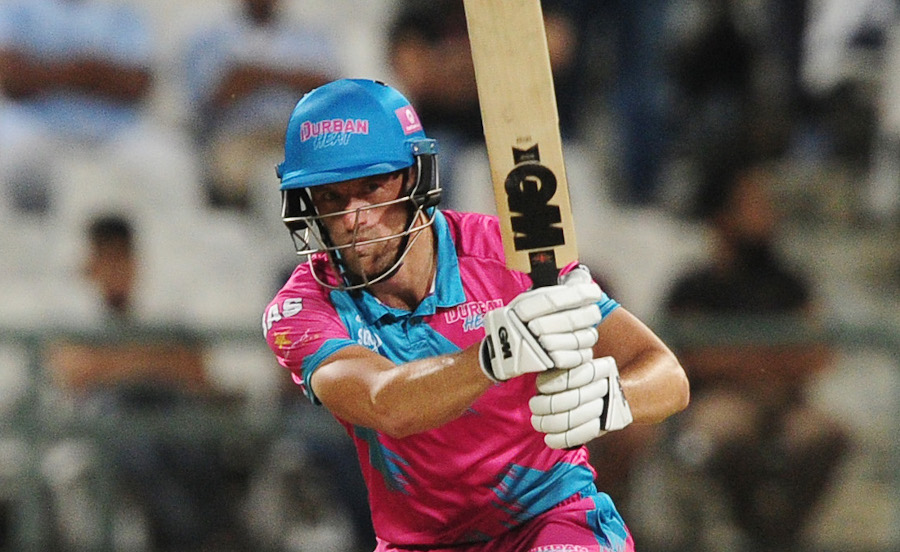
At 6 foot 2 inches tall, Dane Vilas is a towering figure in the heart of the Durban Heat batting line-up, and, ever since he was recruited for the team in the Mzansi Super League 2.0 draft in September this year, has caught the eye with his on-field leadership style and calm demeanour.

However, following the Heat’s struggles in the Mzansi Super League last year (they finished as the wooden-spooners with just three wins from 10 matches), this campaign is fast proving to be a breath of fresh coastal air, and winning games is proving to be a surmountable mountain for the coastal side.

The Heat’s three wins in a row is not surprising as Vilas came into this MSL 2.0 on the back of captaining the Jozi Stars to glory last year – and his absence from the Wanderers-based side has been keenly felt (the Stars sit at the basement of the log with seven losses from nine matches).

In contrast to the current Stars skipper Temba Bavuma, Vilas is a vocal captain who encourages his fellow fielders by waving his arms and saying comments like “good bowling boys” and “nice fielding gents” during the game. Vilas also frequently shows his desire to win by asking the umpire why a decision was not given out.

Vilas is also a versatile skipper. Against the Cape Town Blitz, he sent himself in at four after his side lost two early wickets, steadied the ship, and went on to make an unbeaten 75 with the bat. Then in the Heat’s next game against the Nelson Mandela Bay Giants, he promoted David Miller ahead of him in the batting-order, and it proved to be a masterstroke, as Miller went on to score a half-century off 39 balls to marshal the Heat to a win by six wickets.

But the appointment of Gary Kirsten as the Heat’s new coach, after the evergreen Grant Morgan was shown the door, has borne tasty fruit for the Kingsmead-based side.

Kirsten, with all his experience of coaching a smorgasbord of T20 sides around the Globe (the likes of Royal Challengers Bangalore, Delhi Daredevils, Hobart Hurricanes, Welsh Fire have all acquired his services at various stages), has brought canny T20 nous to the Heat.

Kirsten’s knowledge of Ravi Bopara’s potent form in the shortest form of the game led to him drafting the English all-rounder for the Heat’s MSL 2.0 campaign.

Bopara has brought his fine form to the Heat – his batting average stands at a phenomenal 87.00 from his three innings, coupled with a healthy strike-rate of 131.81. His medium pacers have also been used regularly by Vilas.

Vilas has also used an interesting tactical ploy throughout the current MSL (which may have some Kirsten-sprinkles) of not bowling the death-bowler Malusi Siboto until the later stages of the innings.

Siboto usually comes into the Heat’s bowling attack during the 15th over, where his yummy yorkers and subtle slower balls often reduce batsmen to deers in the headlights.

*Statistics supplied by ESPNcricinfo at the time of going to press (7 December 2019).
Featured

Is Rassie van der Dussen going down the drain?

Rassie van der Dussen, who was cited by many as ‘the next AB de Villiers’ after his prolific performances for the Proteas at the 2019 Cricket World Cup, is now down in the dumps and looks unable to decipher a way out of his batting slump.

In this year’s Mzansi Super League (MSL), he has mustered a mere 130 runs at an underwhelming average of 26.00 and strike-rate of 120.37. This is in stark contrast to the 469 runs he scored at a phenomenal average of 58.62 and strike-rate of 138.75 in the 2018 edition of the MSL.

Why then is Van der Dussen not playing at his brilliant best in this year’s MSL?

  • Because of the arrival of Temba Bavuma, Van der Dussen is now batting at four for the Jozi Stars even though his success in last season’s MSL was at number three. He now feels rushed at the crease as he has less time to get himself settled than he did when he came in at three.
  • South African Cricket sources reveal that Van der Dussen was disappointed after Bavuma was named captain, as he thought that his fantastic MSL campaign last year would have got him the nod to replace the now departed Jozi Stars captain Dane Vilas.
  • One of the sources also reveal that, after Van der Dussen’s brilliant World Cup this year, he is now feeling too much pressure as the public and media continue to blow his trumpet.
  • Another source reveals that Van der Dussen now feels that he has cemented his place in the Proteas team, so he is not training as much as he did before the World Cup.
Featured

Why the Tshwane Spartans squad reflects the dire state of South African Cricket

Everything that is wrong with South African cricket is reflected in the Tshwane Spartans squad.

The Spartans boast two fast-bowlers, namely Lungi Ngidi and Lutho Sipamla, that are key members of the current Proteas T20 side. Yet, it is Morné Morkel, the 35-year-old fast-bowler who retired from international duty to earn top dollar as a domestic cricketer in England, who has been the Spartans’ best bowler in the second-edition of the Mzansi Super League – Morkel has taken eight wickets at an economy-rate of 5.74, while Ngidi and Sipamla have taken a combined total of 5 wickets at an economy-rate of 8.08 and 11.28 respectively.

Morkel is not the first South African cricketer who hanged up their international boots too early. Graeme Smith was another who was eager to put his feet up despite having the time and talent to continue playing at the highest level.

Then there is Dean Elgar, the Spartans’ opening batsmen and occasional left-arm spinner. But, Elgar has erroneously been labelled as ‘only a Test Player’ by the Proteas Selectors and thus is another player, who could still be helping the Proteas as next year’s T20 World Cup, that has never been appreciated by the Proteas selectors.

Theunis de Bruyn is another player, who happens to play for the Spartans, who has been wrongly pigeonholed by the Proteas Selectors. De Bruyn has only played Test cricket even though his career stats and aggressive batting-mentality indicate that he should be playing T20 and 50 over cricket for the Proteas.

The Proteas Selectors should, therefore, keep an inquisitive eye on the Spartans to try identify some of the downfalls plaguing South African cricket.

Featured

Ferisco Adams shines in Mzansi Super League

Ferisco Adams has been so good in the Mzansi Super League that he should be selected for the Proteas T20 squad.

In this year’s edition, Adams has taken 3 wickets from the 6.4 overs he has bowled at a miserly economy-rate of 6.60. 

He then showed his batting prowess with a quick-fire 23 not out off just 12 balls against the Nelson Mandela Bay Giants last night.

Adams brings something different to a team because he is relatively short for a fast bowler and thus the ball comes out of his hand at a lower angle than the average fast bowler. So, batsmen have a different angle to contend with when facing Adams, whose bowling is very reminiscent of that of Australian Chadd Sayers.

And since Adams is also very similar to Vernon Philander, Cape Town Blitz coach Ashwell Prince went for the experience of the latter in the draft at the expense of Adams.

Nevertheless, Adams has been an apt addition to the Paarl Rocks’ roster, as he bowls good yorkers and slower balls along with being a more than handy batsman.

The notion that Adams is a unique bowler is not unprecedented for Western Cape-born cricketers – Paul “frog in a blender” Adams, the former chinaman bowler with a unique bowling action also hails from the province.

Featured

Why was Pite van Biljon not retained by the Jozi Stars?

Big-hitting middle-order batsman Pite van Biljon came back to haunt the Jozi Stars over the past weekend. Van Biljon was picked up by the Tshwane Spartans for Mzansi Super League 2.0 after plying his trade for the Jozi Stars in the 2018 edition of the South African T20 tournament and used his first game against his former side to demonstrate his true ability.

What did he do?

Van Biljon dominated the Jozi Stars bowling attack with a muscular 45 off 29 deliveries, and, in doing so, helped to construct a vital 63-run partnership with AB de Villiers for the fifth wicket at the Wanderers on Sunday 24 November.

Why was he let go by the Jozi Stars?

In the first edition of the Mzansi Super League last year, Van Biljon could only muster 98 runs in 11 matches at an average 24.50 for the Jozi Stars. And his only knock of note was a 13-ball 42 not out against the Spartans and this lack of runs is a possible reason as to why the Jozi Stars did not retain him.

South African Cricket sources reveal that Van Biljon, the Knights captain, was not retained by the Jozi Stars because the management did not want too many players with captaincy experience in the team to avoid disagreements about in-game decisions. And, since the management were eager to bring Temba Bavuma into the squad as the team’s captain, having Van Biljon, and other players with captaincy experience like Chris Gayle, Simon Harmer and Aaron Phangiso, would make the brain-trust too big to handle.

South African cricket sources also reveal that Spartans coach Mark Boucher sees something of his very own former cricketing self in the aggressive way that Van Biljon plays the game, and was eager to have Van Biljon in the squad alongside other big-hitters like De Villiers and Heinrich Klaasen.

*Statistics supplied by ESPNcricinfo.       

Featured

What has happened to Kagiso Rabada?

Kagiso Rabada, the great pace bowler who sits in second-place on the ICC Test Bowling Rankings, has not seemed to be at his brilliant best of late.

What are the facts?

He picked up 11 wickets in 9 matches at this year’s 2019 Cricket World Cup at an average of 36.09 and strike rate of 42.5 – which is way below his career ODI average of 27.34 and strike rate of 32.8.

And in this year’s Mzansi Super League 2.0, he has taken only five wickets from the six matches he has played so far with an underwhelming economy-rate of 8.21.

So, what has happened to Kagiso Rabada?

  • Maybe he suffering from burnout?

Most international balls bowled since 1 January 2019 (Test, ODI, T20I):

1. Nathan Lyon (Aus) – 11 340

2. Moeen Ali (Eng) – 10 198

3. Ravi Ashwin (Ind) – 10 090

4. Kagiso Rabada (SA) – 9 635

5. Ravindra Jadeja (Ind) – 9 289 

Rabada is the only fast bowler in the above top-five list, with the other four all spinners. It is a statistic that could be used to justify the notion that Rabada has been overworked at international level since breaking onto the scene as a 19-year-old. 

  • Have his opponents worked him out?

As bowlers play more and more, especially with and against players of different nationalities in T20 tournaments around the world, opposition batsmen sometimes become accustomed to the skills a bowler possesses. The likes of Sunil Narine, Peter Siddle and Steven Finn have all been figured out by opposition batsmen and one wonders if Rabada is following suite.

  • Is his tactical mindset not right?

In this year’s Indian Premier League, Rabada successfully dished out his yummy yorkers to bamboozle Kolkata Knight Rider’s Andre Russell as he defended 10 runs in the Super Over to lead Delhi to a delicious win at the Feroz Shah Kotla stadium. But since then, he has barely bowled any yorkers to help mix up his deliveries.

  • Has the fame gone to his head?

Last year, Rabada may have got a sense of entitlement after Nissan gifted him a fiery red 370Z two-seater car‚ which is worth in excess of R700 000 and which pumps out 245kw horsepower.

Channel24 reported in August this year that Rabada has been working on a new song alongside SA’s self-taught producer and DJ, Da Capo, at the Red Bull Music Studios, in Cape Town. So, is Rabada spending too much of his time nurturing his other talents, and not fully focusing on honing his cricketing skills?

  • Are the coaches not coaching him properly?

What Ottis Gibson did well in the early stages of his tenure as Proteas coach was to encourage Rabada to bowl fast and express himself, as well as helping him with his short-pitched deliveries. One wonders if Rabada, who is still in the early stages of his career, is receiving good and appropriate advice from his current coaches.

Rabada should not be used by coaches as a tool for short-term success. Instead, he should be nurtured holistically so that his career gets back on its tremendous upward curve.

*Statistics supplied by ESPNcricinfo.       

Design a site like this with WordPress.com
Get started